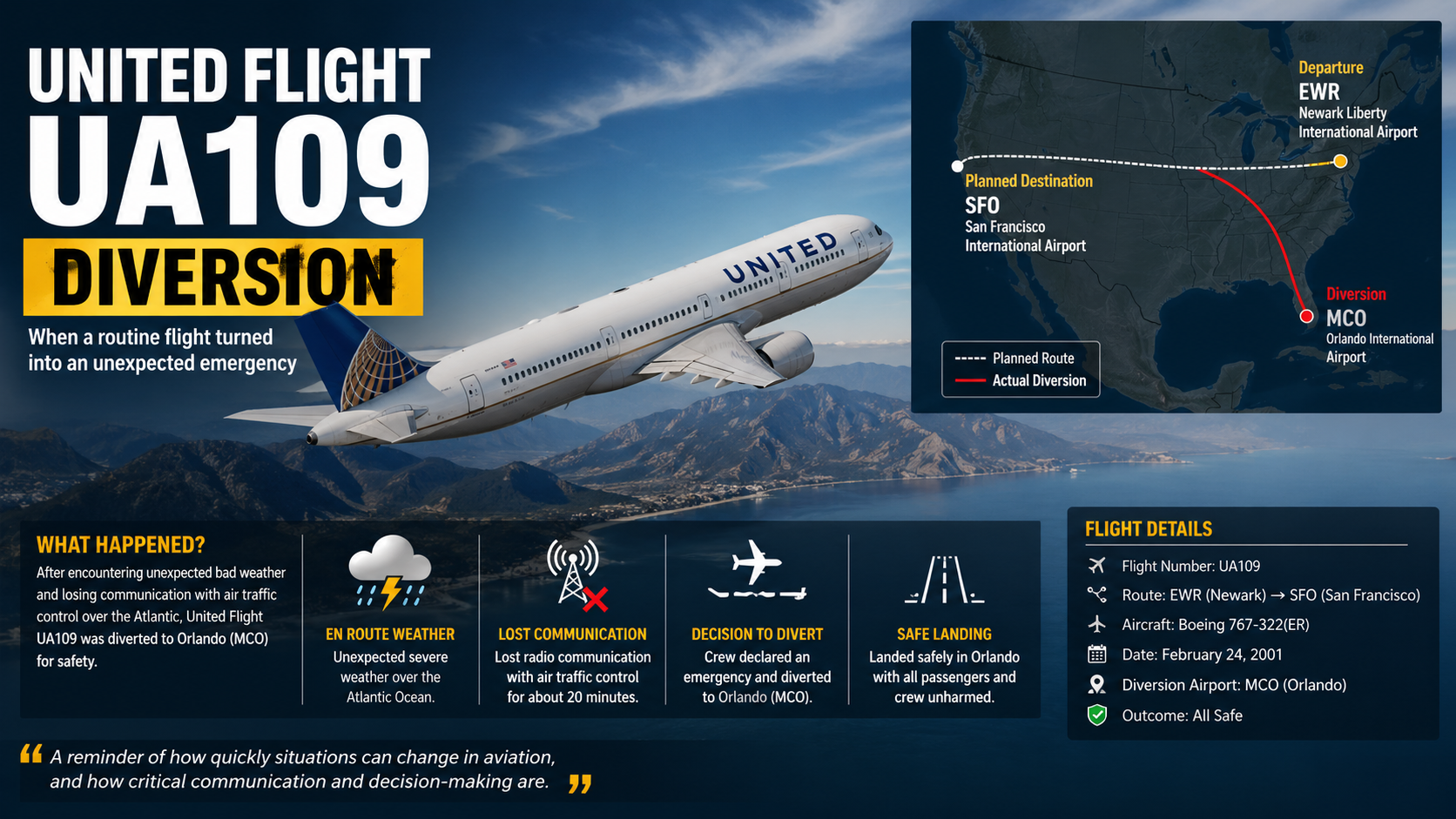
United Flight UA109, an international flight traveling from Newark Liberty International Airport (EWR) to San Francisco International Airport (SFO), experienced an unexpected diversion during its journey. This article explores the circumstances surrounding this diversion, what led to the decision, the impact on passengers, and what you need to know about the event.
Understanding United Flight UA109’s Journey
United Flight UA109 was initially scheduled to be a routine transcontinental flight from Newark to San Francisco, two major hubs for United Airlines. The flight was expected to take off smoothly and proceed across the United States. However, things took an unexpected turn when the aircraft was diverted to an alternate location. Let’s examine the flight’s journey and what went wrong.
Why Was United Flight UA109 Diverted?
The diversion of United Flight UA109 raised many questions among passengers and aviation enthusiasts alike. In this section, we dive into the reasons behind the decision to divert the flight. Several factors could have contributed to this diversion, including mechanical issues, weather conditions, or medical emergencies onboard. Let’s explore these possibilities in detail.
Mechanical Issues and Safety Concerns
One of the most common reasons for diverting a flight is mechanical failure or safety concerns that arise during the flight. Aircraft, although equipped with advanced technology, are susceptible to various issues that require immediate attention. In some cases, pilots and flight crews are required to divert flights to the nearest airport for safety reasons.
Weather Conditions Affecting the Route
Weather plays a significant role in aviation, and poor weather conditions are often cited as reasons for diversions. For instance, severe thunderstorms, heavy winds, or other adverse weather phenomena can force airlines to change their flight paths. In some instances, pilots must adjust the flight’s trajectory to avoid dangerous conditions, ensuring the safety of everyone on board.
Medical Emergency Onboard
Another reason for diversions could be medical emergencies that require the immediate attention of healthcare professionals. When a passenger falls ill during the flight, especially if the situation is severe, the flight may be diverted to the nearest airport where medical help is available.
The Diversion Process: What Happens Next?
Once the decision to divert the flight is made, several procedural steps are followed. The flight crew must communicate with air traffic control and request clearance for the diversion. Pilots will also need to adjust the flight plan and ensure that the aircraft can safely land at the chosen alternate airport.
Communication with Air Traffic Control
Aviation regulations require pilots to notify air traffic control (ATC) of any changes in the flight’s course. When a diversion is needed, the pilots must receive clearance from ATC to change the flight path, taking into consideration the air traffic in the new direction and ensuring the diversion is as smooth as possible.
Passengers’ Experience During the Diversion
For passengers onboard, a diversion can be a stressful and inconvenient experience. The sudden shift in the flight’s destination often leads to confusion and anxiety. In this section, we explore how passengers reacted to the diversion, what they were informed of, and what steps were taken to manage the situation.
United Airlines Response: How They Managed the Situation
As one of the largest airlines in the world, United Airlines has protocols in place to handle unexpected situations such as flight diversions. Once the flight was diverted, United Airlines acted swiftly to ensure the safety and comfort of the passengers.
Immediate Support for Passengers
Upon landing at the alternative airport, United Airlines staff were ready to assist passengers. They provided updates on the situation and worked to accommodate affected passengers, whether by offering hotel accommodations, food, or new flight arrangements. Customer service was crucial in managing the situation smoothly.
Rebooking and Compensation
United Airlines typically offers rebooking options for passengers whose flights are diverted. In cases of significant delays or diversions, the airline may also offer compensation such as travel vouchers, meal credits, or even reimbursement for additional costs incurred due to the diversion.
How United Flight UA109 Diversion Impacted the Airline’s Reputation
While United Airlines handled the diversion professionally, incidents like this can have lasting effects on an airline’s reputation. Customers who experience inconveniences often voice their frustrations on social media or through formal complaints. This section examines how United Airlines managed to maintain its reputation following the diversion of Flight UA109.
Social Media Reactions and Customer Feedback
In today’s digital age, social media plays a major role in shaping public perception. Passengers and onlookers often take to platforms like Twitter and Instagram to share their experiences, both positive and negative. How did passengers of United Flight UA109 react to the diversion, and how did the airline respond?
Long-Term Effects on Customer Trust
Diversions, while often unavoidable, can erode trust among frequent flyers. This section looks at whether the diversion affected United Airlines’ long-term relationship with its passengers and whether they took any steps to prevent similar occurrences in the future.
Lessons Learned from the United Flight UA109 Diversion
Every flight diversion presents an opportunity for learning and improvement. For both passengers and airlines, understanding the root cause of the diversion can lead to better preparations in the future. United Airlines, like many other carriers, will likely implement changes to its procedures following this event.
Improving Safety Protocols and Emergency Procedures
Flight diversions often prompt airlines to reassess their safety protocols. United Airlines may have reviewed its emergency response strategies to ensure more effective handling of unexpected situations. This could involve more advanced training for flight crews and refining communication systems with air traffic control.
Enhancing Passenger Communication
One of the key takeaways from any diversion is the importance of clear and timely communication with passengers. United Airlines may seek to improve how it communicates with passengers during disruptions, ensuring they are kept informed about delays and changes as soon as they happen.
Conclusion: United Flight UA109’s Diversion and What You Should Know
The diversion of United Flight UA109 was an unexpected and inconvenient event, but it was handled efficiently by the airline’s staff. While diversions are rare, they do occur due to a variety of reasons, ranging from mechanical issues to weather concerns. For passengers, the experience of being diverted is often stressful, but United Airlines took the necessary steps to manage the situation and ensure the safety of everyone onboard.
For those planning to travel with United Airlines or any other airline, it’s essential to understand that flight diversions are part of aviation safety protocols. While they can disrupt travel plans, they are implemented with the safety of passengers as the top priority. Understanding the process and the reasons behind diversions can help travelers better prepare for unexpected disruptions during their journeys.