
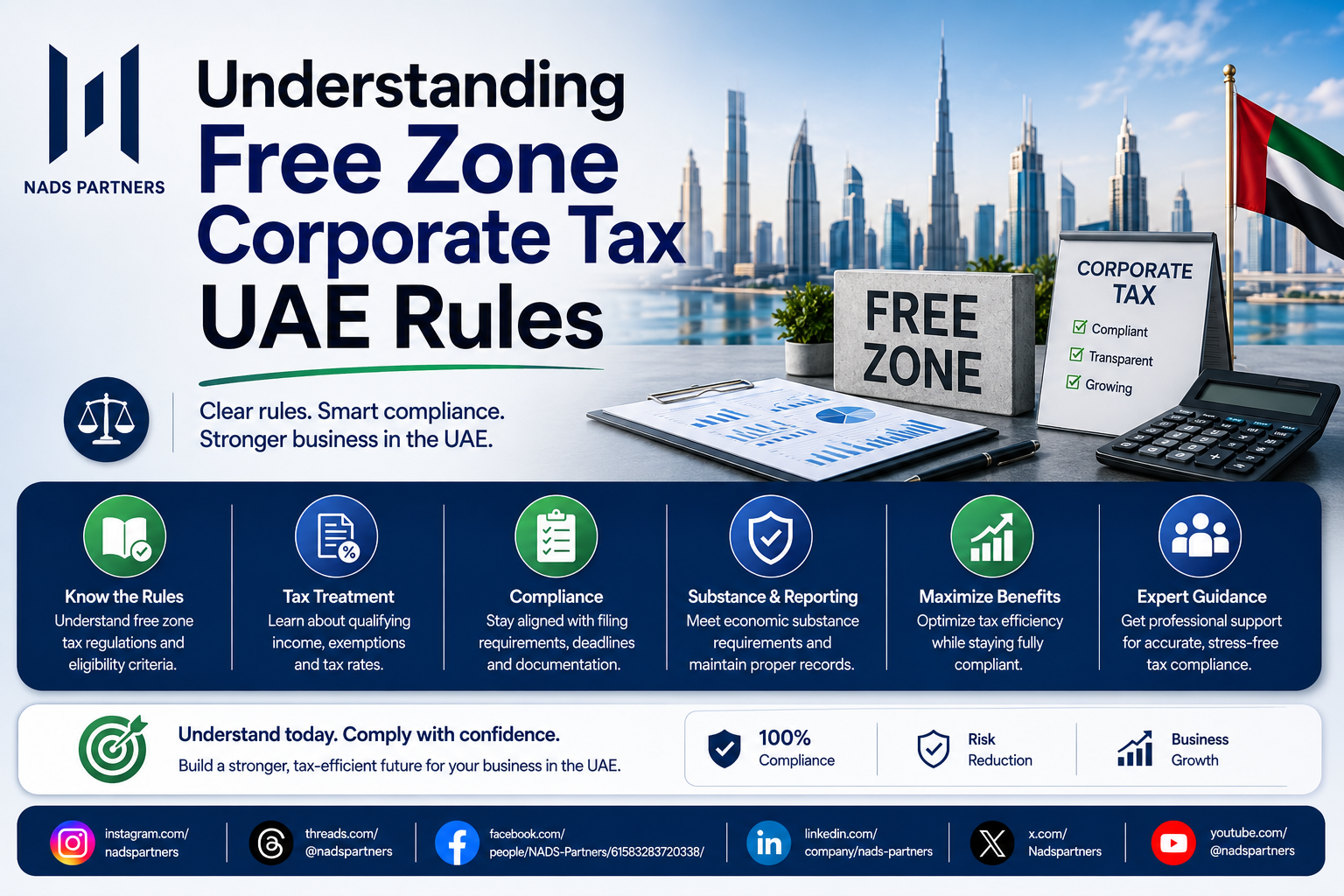
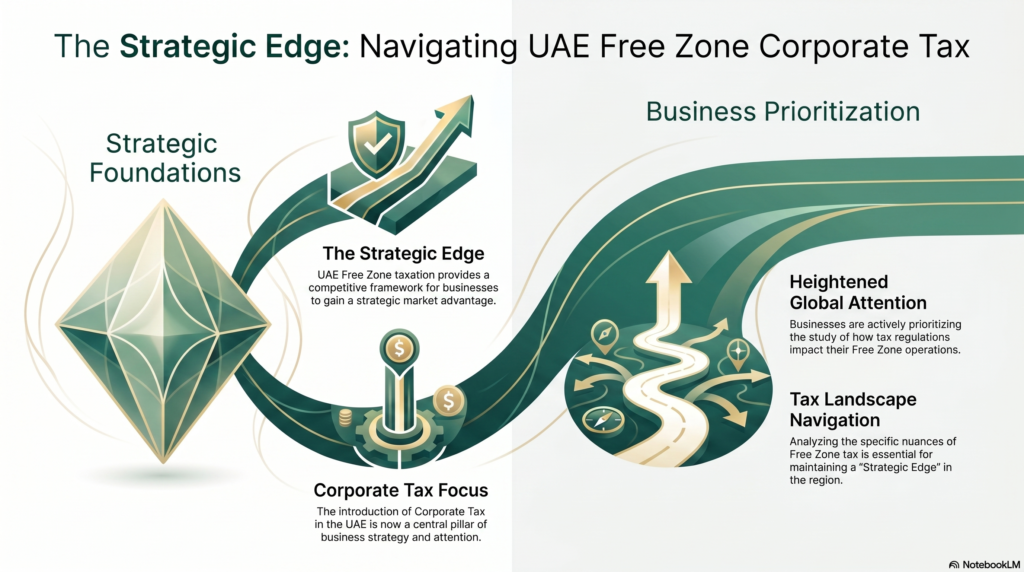
For years, the UAE has remained one of the world’s strongest business destinations for entrepreneurs, international investors, startups, and multinational companies. From Dubai to Abu Dhabi, free zones became symbols of opportunity, offering full foreign ownership, simplified regulations, and attractive tax incentives that encouraged global companies to establish operations across the Emirates.
Today, however, the conversation around business growth has changed. The introduction of free zone corporate tax UAE regulations has transformed how companies approach compliance, financial planning, and operational strategy. Businesses that once viewed free zones as entirely tax-free environments are now realizing that maintaining tax advantages requires deeper understanding, proper documentation, and ongoing compliance with UAE corporate tax law.
The reality is simple. The UAE still offers exceptional business advantages, but companies must now actively protect their eligibility under the evolving free zone corporate tax UAE framework. For business owners operating in Dubai, Sharjah, Ajman, Ras Al Khaimah, and Abu Dhabi, understanding these regulations has become essential for sustainable growth and financial security.
What Free Zone Corporate Tax UAE Really Means
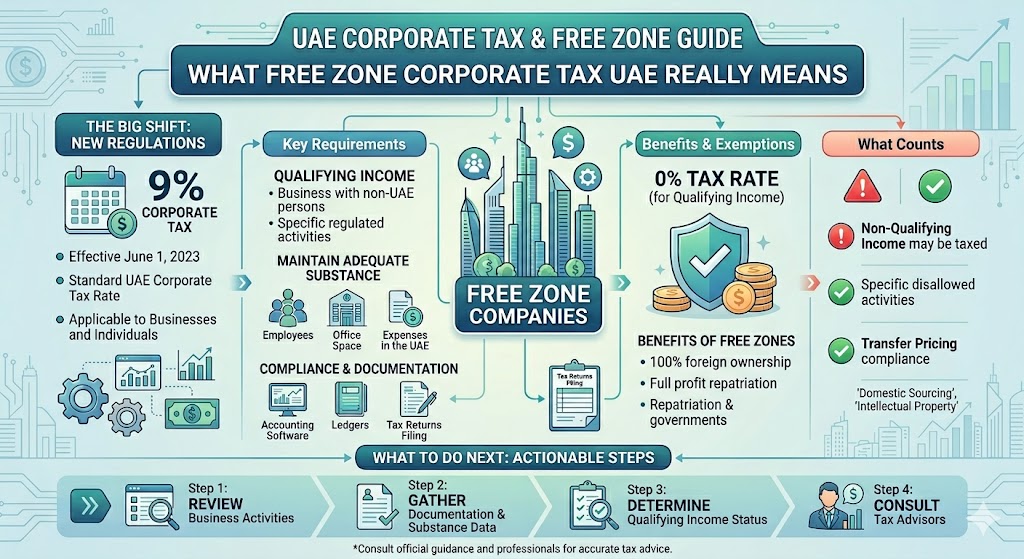
The introduction of free zone corporate tax UAE regulations was designed to balance two important goals. The UAE wanted to maintain its global competitiveness while also aligning with international tax transparency standards and OECD compliance requirements.
Under UAE corporate tax law, businesses earning taxable profits above the approved threshold may become subject to corporate taxation. However, free zone businesses can still access significant tax benefits if they meet the conditions required to become a qualifying free zone person.
This distinction is now one of the most important aspects of free zone corporate tax UAE compliance. Companies that understand qualifying income, economic substance, and FTA regulations can continue benefiting from reduced tax exposure. Businesses that ignore these rules may lose their exemptions completely.
Why Businesses Are Paying Attention to Free Zone Corporate Tax UAE
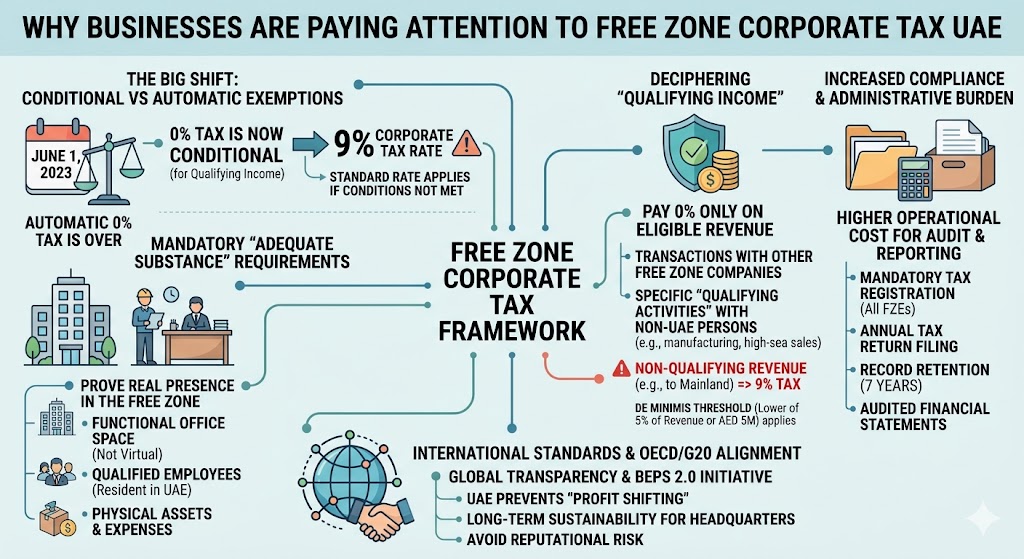
Across the UAE, thousands of companies are reassessing their structures because of the growing importance of free zone corporate tax UAE regulations. Many businesses initially believed that operating inside a free zone automatically guaranteed complete tax exemption. The Federal Tax Authority has made it clear that this assumption is no longer accurate.
Today, maintaining tax efficiency depends on proper corporate tax registration UAE procedures, audited financial records, transfer pricing compliance, and accurate classification of qualifying income. This shift has pushed companies to focus more seriously on financial reporting, bookkeeping, and tax filing obligations.
For many entrepreneurs, the introduction of free zone corporate tax UAE regulations represents more than just a compliance change. It reflects a major evolution in the UAE business environment where transparency, accountability, and strategic financial management now play a central role in long-term success.
Understanding Qualifying Free Zone Person Status
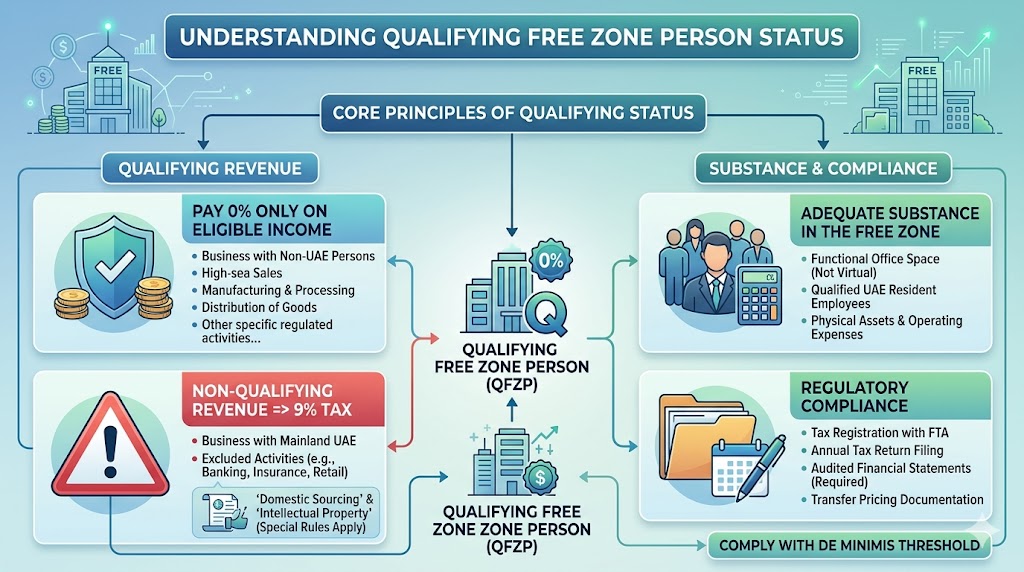
One of the most discussed concepts within free zone corporate tax UAE regulations is qualifying free zone person status. This status determines whether a company can continue benefiting from a 0% corporate tax rate on qualifying income.
To maintain this status, businesses must demonstrate real economic activity inside the free zone. Companies are expected to maintain operational substance, active management, employees, and genuine commercial functions within the UAE jurisdiction where they operate.
The Federal Tax Authority also evaluates the type of income generated by businesses. Certain transactions involving mainland operations may not qualify for preferential tax treatment under free zone corporate tax UAE rules. This creates additional complexity for businesses operating across multiple markets inside the UAE.
Proper accounting systems, audited financial statements, and transfer pricing documentation have now become critical parts of maintaining compliance. Companies that fail to satisfy these conditions risk losing qualifying status and becoming subject to the standard UAE corporate tax rate.
The Rising Importance of UAE Corporate Tax Compliance
The growing focus on free zone corporate tax UAE compliance has changed how businesses manage their internal financial operations. Companies can no longer rely on outdated accounting systems or incomplete documentation practices.
Modern UAE tax compliance requires accurate bookkeeping, transparent reporting, and timely corporate tax return filing UAE procedures. Businesses are expected to maintain supporting records capable of withstanding FTA review and financial audits.
Even small reporting errors may create significant problems. Administrative penalties, additional tax liabilities, compliance investigations, and reputational risks have become real concerns for companies failing to meet UAE tax regulations.
Because of this, businesses across Dubai and other Emirates are investing more heavily in tax consultants UAE services, compliance management, and financial advisory support. The goal is no longer only avoiding penalties. Companies now understand that proper free zone corporate tax UAE planning can strengthen operational stability and investor confidence.
How Free Zone Corporate Tax UAE Impacts Business Strategy
The impact of free zone corporate tax UAE regulations extends far beyond tax filing. Businesses are now restructuring operations, reviewing commercial activities, and analyzing revenue streams to ensure compliance with qualifying income rules.
For example, companies involved in e-commerce, consulting, logistics, digital services, and international trade must carefully evaluate how their income is classified under UAE business taxation rules. Mainland transactions may receive different treatment compared to approved free zone activities, making strategic planning increasingly important.
This has created a new demand for tax-efficient operational models. Businesses are now focusing on financial transparency, regulatory alignment, and proactive tax planning strategies that support both compliance and long-term profitability.
The companies adapting fastest to free zone corporate tax UAE regulations are positioning themselves for stronger growth in the future UAE economy.
Common Challenges Businesses Face
As businesses attempt to navigate free zone corporate tax UAE requirements, several common compliance issues continue appearing across the market.
One major challenge is misunderstanding the difference between qualifying and non-qualifying income. Many companies still assume that all revenue earned by free zone entities automatically benefits from 0% taxation. In reality, UAE corporate tax rules are far more structured.
Another issue involves poor financial recordkeeping. Businesses that fail to maintain organized accounting systems often struggle during tax filing UAE procedures and financial audits. Incomplete documentation increases compliance risk and may affect tax eligibility.
Transfer pricing regulations also create confusion for companies operating with related entities or international subsidiaries. UAE tax law now requires businesses to maintain documentation supporting intercompany transactions under international compliance standards.
Delayed corporate tax registration UAE procedures represent another growing issue. Businesses postponing compliance often expose themselves to unnecessary regulatory penalties and operational complications.
Why Professional Guidance Matters
The complexity of free zone corporate tax UAE regulations has increased demand for experienced tax consultants and financial advisors throughout the Emirates. Businesses now recognize that corporate taxation is no longer a simple administrative process. It requires ongoing strategy, regulatory understanding, and accurate implementation.
Professional advisors help businesses evaluate qualifying free zone person eligibility, manage UAE tax filing obligations, maintain compliance documentation, and structure operations efficiently. This support allows companies to reduce compliance risks while focusing on growth opportunities.
At NADS Partners UAE, businesses receive tailored support designed specifically for the UAE corporate tax environment. From corporate tax registration UAE procedures to financial reporting and compliance assessments, professional guidance helps simplify the challenges associated with free zone corporate tax UAE obligations.
The Future of Free Zone Corporate Tax UAE
The UAE continues strengthening its reputation as a globally trusted financial and commercial hub. While corporate taxation has introduced new responsibilities, free zones remain highly competitive destinations for international investment and business expansion.
The future of free zone corporate tax UAE will likely involve continued regulatory refinement, stronger compliance expectations, and greater emphasis on transparency. Businesses that remain proactive, organized, and professionally supported will be best positioned to benefit from the UAE’s evolving economy.
Companies should regularly review operational structures, monitor FTA updates, maintain strong accounting systems, and invest in strategic tax planning to remain competitive under the modern UAE tax framework.
Final Thoughts
The introduction of free zone corporate tax UAE regulations marks one of the most significant shifts in the country’s modern business environment. While UAE free zones still provide substantial advantages, maintaining those benefits now requires careful compliance, accurate reporting, and strategic financial management.
Businesses that understand qualifying free zone person rules, maintain proper documentation, and approach UAE corporate tax compliance proactively can continue thriving within one of the world’s most attractive commercial markets.
As regulations continue evolving, professional expertise will become increasingly valuable for companies seeking stability, compliance, and long-term growth. With the right strategy and guidance, businesses can confidently navigate the changing landscape of free zone corporate tax UAE while protecting profitability and building a stronger future in the UAE market.